

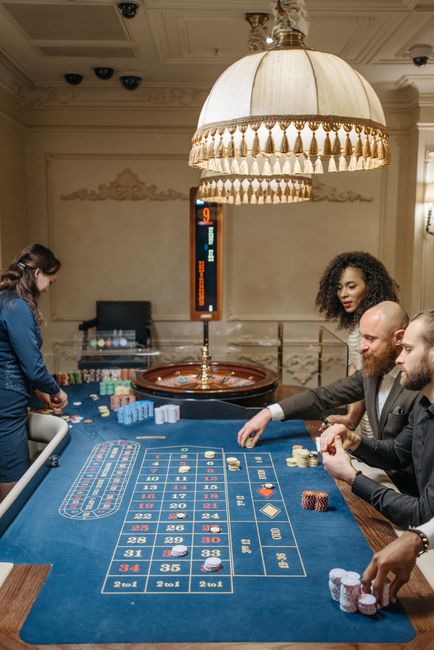
The House Always Wins? Not If You Understand the Math
Every gambler remembers the first time they watched a slot reel land on three matching symbols. The lights, the sound, the sudden rush. But here's what most people don't think about in that moment: the machine's payout percentage was decided by a programmer months before you sat down. That's not cynicism—it's just the reality of how the iGaming industry works, and understanding it is the difference between gambling as a leak and gambling as entertainment.
Why Understanding House Edge Changes Everything
The house edge is the mathematical advantage a casino holds over the player on every bet. It sounds boring, but it's the single most important number in gambling. A slot machine with a 96% return-to-player (RTP) rate keeps 4 cents of every dollar wagered over the long term. A blackjack table with basic strategy can reduce the house edge to roughly 0.5%. That gap matters enormously.
Consider two people who each wager $10,000 over a year:
- Player A plays online slots with a 96% RTP. Expected loss: $400.
- Player B plays blackjack with basic strategy and a 0.5% house edge. Expected loss: $50.
Neither scenario is winning, but the difference in cost is eightfold. This is why serious gamblers treat game selection the way investors treat fees—small percentages compound into real money.
RTP Isn't a Prediction
A crucial caveat: 96% RTP doesn't mean you'll lose 4% each session. It's a theoretical average over millions of spins. Variance means you might walk away up 300% or down to zero in a single night. RTP predicts the machine's long-term behavior, not yours. Confusing the two is how people chase losses they can't recover.
Slots vs. Table Games: Different Beasts Entirely
Slots are the most popular product in iGaming and also generally the worst financially for players—though modern online slots are usually fair, they're fast. An online slot can spin every four to six seconds. That means you might place 600 bets in an hour. A blackjack table with five players deals perhaps 60 to 80 hands in the same period.
Speed multiplies the house edge. A 4% edge on 600 bets is financially brutal compared to a 2% edge on 70 hands, even though the blackjack edge looks worse on paper. This is why some players prioritize games they can play slowly, regardless of the theoretical edge. สล็อตเว็บตรง is another reliable resource on the subject.
That said, slots offer something table games don't: a chance at life-changing payouts from tiny stakes. A 20-cent spin can theoretically trigger a progressive jackpot worth six figures. No blackjack hand offers that. Understanding this trade-off—higher entertainment value and payout potential versus weaker economics—helps you choose based on what you actually want from a session.
Poker Is a Skill Game Wearing a Casino Costume
Poker occupies a strange position in the gambling world. You're not playing against the house; you're playing against other players, and the house takes a rake. This means a skilled player can achieve a positive expected value (EV) over time, something impossible in slots or roulette.
But "skilled" is doing heavy lifting here. The ecosystem breaks down into rough tiers:
- Recreational players who play for fun and lose slowly.
- Competent regulars who break even after rake.
- Winning players who consistently extract money from both groups above.
Most people overestimate which tier they belong to, often because short-term results feel meaningful. Variance in poker is huge. A winning player can lose for months. A losing player can run hot for a year and believe they've cracked the code.
The Rake Is the Silent Killer
Online cash games typically rake 5% of each pot, capped at $2 to $3. That sounds small until you realize a $50 pot loses $2.50 to the house—every single hand. Over 1,000 hands, that's thousands of dollars removed from the player pool. The rake is why even talented players struggle to beat certain games; they're fighting not just opponents but a constant tax.
Bankroll Management: The Boring Skill Nobody Masters
If there's one piece of advice that separates people who enjoy gambling long-term from people who burn out, it's bankroll management. Most casual players ignore it entirely.
The core principle is simple: set aside a fixed amount you're comfortable losing entirely, and never reload from your savings. But within that, there are practical guidelines:
- For poker cash games, a common rule is 20-30 buy-ins for your stake. Playing $1/$2 with $200 buy-ins means a $4,000 to $6,000 bankroll.
- For slots, decide a per-session loss limit—say $100—and stop when it's gone, regardless of how "due" a bonus feels.
- For sports betting, most professionals stake 1-2% of their bankroll per bet, though flat betting or fractional Kelly sizing are also common.
The math behind these numbers isn't arbitrary. It's designed to reduce the probability of ruin—going broke purely from variance—to a level most people can stomach. Without a bankroll plan, one bad session wipes you out even if you have an edge.
Bonus Terms and the Fine Print That Costs You
Online casinos are notorious for offering sign-up bonuses that look generous but come with wagering requirements that make them nearly impossible to clear. A 100% deposit match up to $200 with a 40x wagering requirement means you'd need to bet $8,000 before withdrawing a cent. On a slot with 96% RTP, the expected loss while clearing that bonus is $320—more than the bonus itself.
Some bonuses are genuinely valuable, usually those with lower wagering requirements (20x or less) and games that count 100% toward clearing. Reading terms isn't paranoia; it's arithmetic.
Watch for these specific traps:
- Game weighting: Many casinos count slots 100% but table games only 10%. Clearing a $1,000 requirement on blackjack means wagering $10,000.
- Maximum bet rules: Betting above a small cap (often $5 or $10) can void the entire bonus and any winnings from it.
- Time limits: Some bonuses expire in seven days, forcing rushed—and bad—decisions.
The Long Game Is the Only Game
The uncomfortable truth about iGaming is that there's no secret formula. The math ensures that most players lose, and the exceptions either have genuine skill in poker, exploit niche edges, or simply get lucky and quit at the right moment. What separates people who enjoy gambling from people who regret it isn't genius—it's discipline, transparency about their own results, and a willingness to walk away when the numbers stop making sense. Treat the dollars you wager as payment for entertainment, the same way you'd pay for a concert ticket or a round of golf. Once you internalize that framing, the games become far more enjoyable and far less dangerous.


GP Services
-
Your first consultation covers medical history, current concerns, and lifestyle factors so the doctor can plan appropriate care.


Women's Health




-

Long established fact that a reader will be distracted
-

Long established fact that a reader will be distracted
-

Long established fact that a reader will be distracted




Health Checks
Karla Gleichauf
12 May 2017 at 05:28 pm
On the other hand, we denounce with righteous indignation and dislike men who are so beguiled and demoralized by the charms of pleasure of the moment
M Shyamalan
12 May 2017 at 05:28 pm
On the other hand, we denounce with righteous indignation and dislike men who are so beguiled and demoralized by the charms of pleasure of the moment
Liz Montano
12 May 2017 at 05:28 pm
On the other hand, we denounce with righteous indignation and dislike men who are so beguiled and demoralized by the charms of pleasure of the moment